
In the vibrant culinary landscape of St. Petersburg, Florida, one noodle destination rises above the rest: Sab Café. Located in the heart of downtown, Sab Café has earned its reputation as the premier spot for noodle lovers in the area. Let’s dive into what makes Sab Café the best noodles restaurant in St. Pete and why it should be at the top of your dining list.
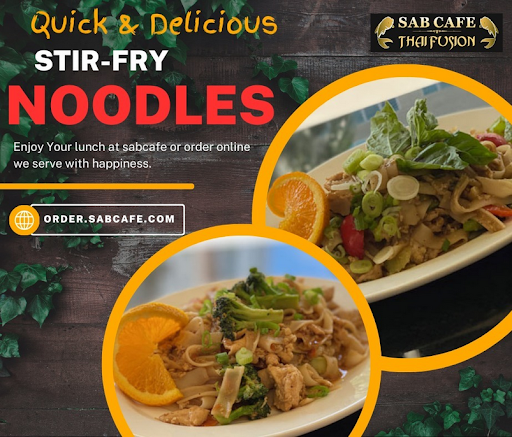
Crafting Noodle Perfection at Sab Café:
At Sab Café, noodles are more than just a dish; they’re a passion. Our chefs meticulously craft each noodle dish, drawing inspiration from the diverse flavors of Asia. From the rich, savory broths of Vietnamese pho to the bold and spicy stir-fries of Thailand, every dish at Sab Café is a culinary masterpiece designed to tantalize your taste buds.
Why Sab Café Stands Out:
What sets Sab Café apart as the best noodles restaurant in St. Pete? It’s our unwavering commitment to quality, authenticity, and flavor. We source the freshest ingredients ensuring that every dish is of the highest quality. Our chefs are experts in their craft, drawing on years of experience to create dishes that are as delicious as they are authentic.

A Culinary Journey for the Senses:
Step inside Sab Café, and you’ll be greeted by the enticing aroma of simmering broths and sizzling noodles. Our cozy and inviting atmosphere sets the stage for a memorable dining experience, whether you’re dining solo or with friends and family. With attentive service and a warm ambiance, Sab Café offers more than just a meal; it’s an immersive culinary journey for the senses.
Community and Connection:
At Sab Café, we believe that food has the power to bring people together. Whether you’re sharing a bowl of noodles with loved ones or striking up a conversation with fellow diners, our restaurant is a place where connections are made and memories are created. With a welcoming atmosphere and a sense of camaraderie, Sab Café is more than just a restaurant; it’s a gathering place for the community.
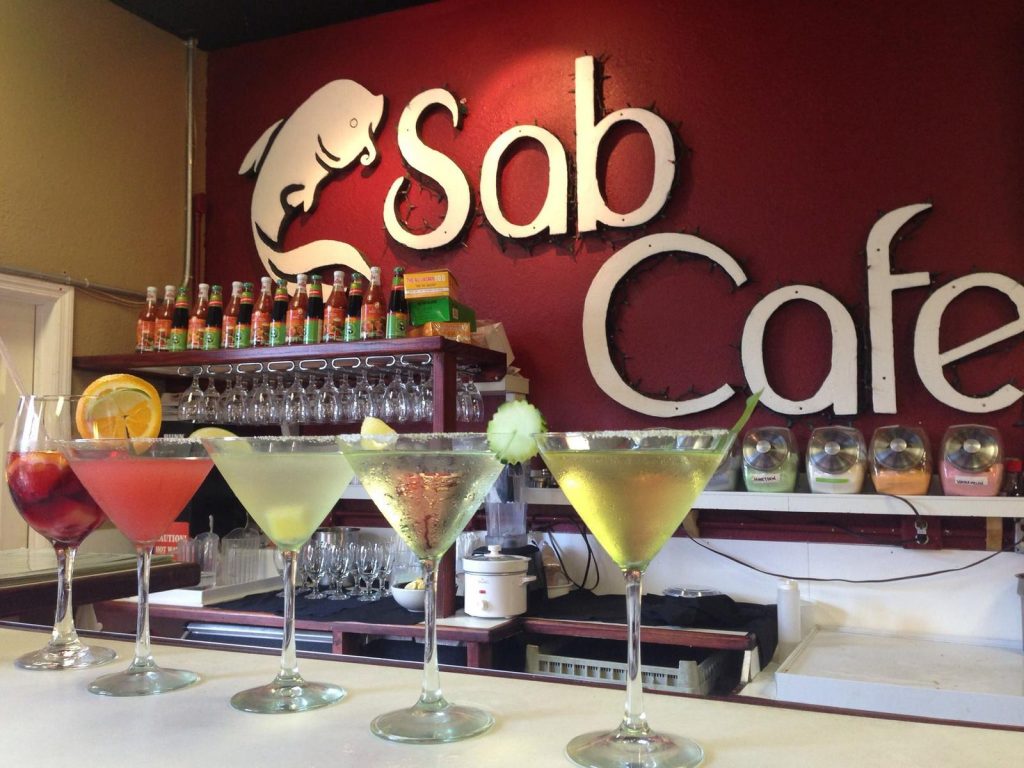
Experience the Best Noodles Restaurant in St. Pete:
Ready to experience noodle perfection? Visit Sab Café and discover why we’re St. Pete’s top destination for noodle lovers. From the first bite to the last slurp, you’ll taste the difference that passion, quality, and authenticity make. Join us at Sab Café and experience the best that St. Pete has to offer.
Order Noodles Online:
- Pad Thai $15.00 – Made with rice noodles, eggs, bean sprouts, green onions and crushed peanuts.
- Drunken Noodles $15.00 – Stir fried, wide rice noodles with basil, green and red bell peppers, snow peas, celery and egg.
- Pad se-ew noodles $15.00 – Stir fried wide rice noodle with broccoli, cabbage, carrots and egg in sweet black soy sauce.
- Pad lad na $15.00 – Wide rice noodles with sweet yellow bean gravy, carrots, cabbage, and broccoli in a shallow soup.
- Pho Soup $15.00 – Rice noodle soup with fresh herbs and vegetables served on the side.
- Pho Deluxe $18.00 – Rice noodle soup with meatball, flank steak, fresh herbs and vegetables served on the side.
- Bun Bowl $15.00/$17.00 – Vermicelli noodles with lettuce, cucumbers, bean sprouts, carrots, crushed peanuts, and fresh herbs with sweet fish sauce on the side.
- Lo Mein $15.00 – Chinese egg noodles in a soy sauce blend with egg, carrots, broccoli and onions with your choice of protein.
- Udon Noodles $15.00 – Stir fried udon noodles with carrot, onion , mushroom, broccoli, and snow peas topped with sesame seed and scallions.
- Udon Soup $15.00 – Udon noodles in a korean spicy miso soup with mushrooms, bean sprouts, seaweed and scallions.
- Pad Woon Sen $15.00 – Stir fried glass noodle with snow peas, onion, bell peppers, carrot, egg and broccoli.
What Are Drunken Noodles?
Drunken noodles, or “Pad Kee Mao” in Thai, is a popular Thai street food dish known for its bold flavors and spicy kick. The name “drunken noodles” is quite evocative and has led to various interpretations regarding its origin.
One popular theory suggests that the dish is so spicy that one might need to drink a lot of alcohol to cool down the heat, hence the name “drunken.” Another theory is that it’s a favorite dish to eat while drinking or as a hangover cure, capable of reviving someone after a night of drinking.
Some Ingredients:
Drunken noodles feature a hearty mix of wide rice noodles stir-fried with a variety of ingredients, including:
- Soy sauce, fish sauce, and oyster sauce for a savory depth.
- Garlic, bird’s eye chili, and holy basil (or Thai basil, if holy basil is unavailable) for its distinctive spicy and herbal notes.
- Protein options like chicken, pork, beef, seafood, or tofu.
- Vegetables such as bell peppers, onions, and green beans.
Flavor Profile:
The dish is celebrated for its complex flavor profile, balancing spicy, sweet, salty, and umami elements. The spiciness from the chilies, sweetness from a bit of sugar, saltiness from the soy and fish sauces, and the umami from oyster sauce and meat or seafood create a rich, deeply satisfying taste experience.
Cooking Drunken Noodles:
Cooking drunken noodles involves stir-frying the ingredients at high heat, starting with garlic and chilies, followed by the protein and vegetables, and finally adding the noodles and sauces. The noodles are tossed until they’re evenly coated with the sauce and the ingredients are well combined. The dish is typically served hot, garnished with fresh holy basil leaves.
Drunken noodles offer a delightful exploration of Thai flavors, showcasing the cuisine’s ability to combine a variety of ingredients into a harmonious dish.
For the best noodles in St. Pete, come to Sab Cafe. Visit Sab Café at 111 2nd Ave NE UNIT 100, St. Petersburg, FL and treat yourself to an unforgettable dining experience. We can’t wait to welcome you.

How Are Noodles Made?
- Rice Noodles (like Vietnamese pho or Thai pad thai): These start with rice flour mixed with water to form a batter. The batter is then spread thinly over a cloth stretched over boiling water, steaming into thin sheets. Once cooled, the sheets are cut into strips. The thickness of the noodles can vary, from the thin vermicelli to the wider cuts used in dishes like pad thai.
- Egg Noodles (common in many Chinese dishes): They’re made by adding eggs to wheat flour and water, creating a rich, elastic dough. This dough is then rolled out and cut into noodles. Egg noodles are prized for their tender texture and slight richness from the egg.
- Stir-fried Udon Noodles in a Korean spicy miso soup is a delightful fusion dish that marries the chewy texture of Japanese udon noodles with the bold flavors of Korean cuisine. Here’s a simplified way to make it, bringing together the heartiness of udon and the spicy, umami-packed depth of Korean miso soup.
- Wheat Noodles (like Chinese lo mein or Japanese udon): These are made from wheat flour, water, and sometimes salt. The dough is kneaded, rolled out, and then cut or stretched into strands. Udon noodles, for instance, are known for their thickness and chewy texture, achieved by kneading the dough thoroughly and cutting it into thick strips.
- Rice Vermicelli: Made from rice flour and water, rice vermicelli are thin, translucent noodles that are a staple in Southeast Asian cooking. The process involves making a liquid batter from rice flour and water, which is then steamed into thin sheets or extruded into fine noodles before being cut. After cutting, the noodles are dried under the sun or through commercial dryers, making them shelf-stable. When cooked, they have a soft, slightly chewy texture and are commonly used in dishes like Vietnamese Pho, Singaporean-style noodles, and various stir-fries.
- Glass Vermicelli (Mung Bean Vermicelli): These noodles are made from mung bean starch and water, leading to their other common name, mung bean threads. The mung bean starch is mixed with water to form a dough, which is then extruded into thin strands. Like rice vermicelli, these are also dried to prolong shelf life. Glass vermicelli is known for its transparent appearance and jelly-like texture when cooked. They’re popular in dishes such as spring rolls, hot pots, and cold salads across various Asian cuisines.
- Buckwheat Noodles (like Japanese soba): These are made from buckwheat flour and water, and sometimes a little wheat flour to add gluten, which helps in binding the dough. The dough is rolled, rested, then cut into thin strips. Soba noodles are known for their earthy flavor and can be served chilled with a dipping sauce or in a hot broth.
What Are The Origins of Noodles?
The origins of Thai noodles are a fascinating blend of cultural exchanges and culinary evolution, reflecting Thailand’s history as a crossroads for trade and migration. While noodles themselves are believed to have originated in China, the way they have been adopted and adapted into Thai cuisine is uniquely Thai, showcasing local flavors and ingredients.

Chinese Influence
The most direct influence on Thai noodle dishes comes from Chinese immigrants, who began settling in Thailand (then known as Siam) centuries ago, particularly during the late 18th and early 19th centuries. They brought with them their culinary traditions, including noodle making and noodle dishes. Over time, these noodle dishes were infused with local Thai ingredients and flavors, leading to the creation of distinctly Thai noodle dishes.
Adaptation and Evolution
As Thai cooks began to incorporate noodles into their culinary repertoire, they also started to incorporate key Thai ingredients such as tamarind, fish sauce, lime, and Thai basil, creating a flavor profile that is distinctly different from the original Chinese dishes. This fusion is evident in dishes like Pad Thai, a stir-fried noodle dish that, despite its current status as a quintessential Thai dish, is relatively recent, believed to have been popularized in the mid-20th century as part of a nation-building effort by Thailand’s then Prime Minister, Plaek Phibunsongkhram. The dish was intended to promote Thai nationalism and reduce rice consumption, using noodles as an alternative staple.
Regional Diversity
Thailand’s diverse geography and regional cultures have also influenced its noodle dishes, with different areas putting their own spin on noodle types and preparations. For example, the northern regions of Thailand have a preference for noodle soups like Khao Soi, which features egg noodles in a curry broth, reflecting the influence of neighboring Myanmar. In contrast, the central plains and the capital city of Bangkok have a wide variety of noodle dishes reflecting the cosmopolitan nature of the city and its historical role as a center of trade.
Modern Thai Noodles
Today, Thai noodle dishes are a staple of Thai cuisine, both within Thailand and internationally. They range from hearty noodle soups to vibrant stir-fries, each with its own set of ingredients and flavors. While Thai noodles have their roots in Chinese culinary traditions, they have evolved over centuries into a cuisine that is uniquely Thai, reflecting the country’s history, culture, and culinary innovation.
Customer Reviews

How To Get To Sab Cafe:
From Tampa:
From Clearwater:
From Sarasota:
From Orlando:
About Sab Cafe
Sab Café stands out as a vibrant spot for Asian fusion cuisine, nestled right in the bustling heart of Downtown St. Petersburg, Florida, within the Plaza Towers Courtyard. We pride ourselves on serving dishes that are fresh and made to order, using high-quality ingredients to deliver the authentic taste of Asia. Our outdoor seating offers a cozy spot right beside a space that often lights up with live music and family-friendly events. Inside, you’ll find our sake cocktail bar, where we mix up a variety of fruity flavored sake, including the crowd-pleasing Saketiny!
If you’re craving Asian fusion, particularly Thai and Vietnamese flavors, Sab Café is your destination. Don’t miss out on our famous Oxtail Pho, Drunken Noodles, or the classic Pad Thai. For those on the go, online ordering for pickup is a breeze through our website.
We’re excited to welcome you.
Our Untold Story:
Damron’s journey to opening Sab Café is a tale of unexpected turns. Despite his mother’s warnings about the challenging nature of the restaurant industry, Damron was inspired by his father’s skill in making ramen noodles from scratch and his family’s own small restaurant back in Laos. After relocating from Thailand to the US in 1980 and settling in Saint Petersburg, Florida, Damron eventually grew weary of his corporate job. With no formal experience but armed with determination and online tutorials, he and a small team opened Sab Café.

Indeed, running a restaurant proved to be as demanding as warned. Valerie, Damron’s wife, soon joined him, quitting her job to support the venture. Together, along with their devoted staff, they’ve turned Sab Café into a success since its opening in 2011.
Damron believes in the power of authentic and appealing flavors. “It’s all about satisfying the taste buds,” he says. At Sab Café, every dish is crafted with care and presented beautifully, proving that taste triumphs over fancy presentations. Consistency and flavor are our promises to you.
When you find yourself in downtown Saint Petersburg, let Sab Café treat your palate to an unforgettable dining experience.

National Noodle Day – October 6, 2024
October 6 marks National Noodle Day, and what better way to celebrate than by indulging in the ultimate noodle feast! It’s astounding to think that noodles have graced our tables for over 4,000 years, captivating palates worldwide with their diverse shapes including flat, round, twisted, sheet-like, tubular, and more. Crafted from ingredients such as rice, buckwheat, wheat, with or without eggs, and even modern twists like zucchini, noodles boast a rich tapestry of culinary history.